I’ve been pondering for a while about the true difference between board games, miniatures games (WARGAMES), and role-playing games (RPGs). In my opinion, the following three definitions might be a concise way to summarize the essence of the differences. It’s true, however, that there is some overlap; for example, TTGDRs, while falling under the category of role-playing games, generally have a set of rules that players tend to strictly follow.
Video games aren’t the focus of my discussion because, when it comes to video games, even if they’re presented as RPGs, they aren’t true role-playing games. The player chooses a character type or class, and that’s it; there’s no real role-playing. Video games follow rigid yet complex rules, so much so that they give the feeling of being in an “open world.” In reality, this isn’t the case; the character simply moves through vast virtual worlds with sophisticated NPCs, which gives the feeling of total freedom. In reality, everything follows the script.
Board Games are structured experiences. They come with fixed rules, fixed components (the board) and clear victory conditions. Players follow established mechanics, and are a great choice for those enjoy strategy within a well regulated system.
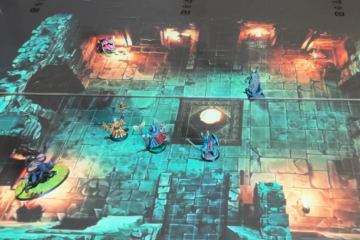
Miniature games introduce a grade of flexibility. While there is a set of fixed rules, the game elements (miniatures and the board), and the victory conditions are not fixed are agreed by the players before the game. This creates a more open experience where tactical decisions and adaptability play a major role.
Role-playing games, however, are in realm of pure creativity. Rules mainly guide character creation and conflict resolution, but beyond that, the experience is driven by imagination. There are no fixed victory conditions, no boards, only a shared narrative shaped by improvisation, and social interaction all under the guidance of the Dungeon Master.

Post originally posted on LinkedIn.
Other posts of this series are available here:
Visit us on Social Media: